
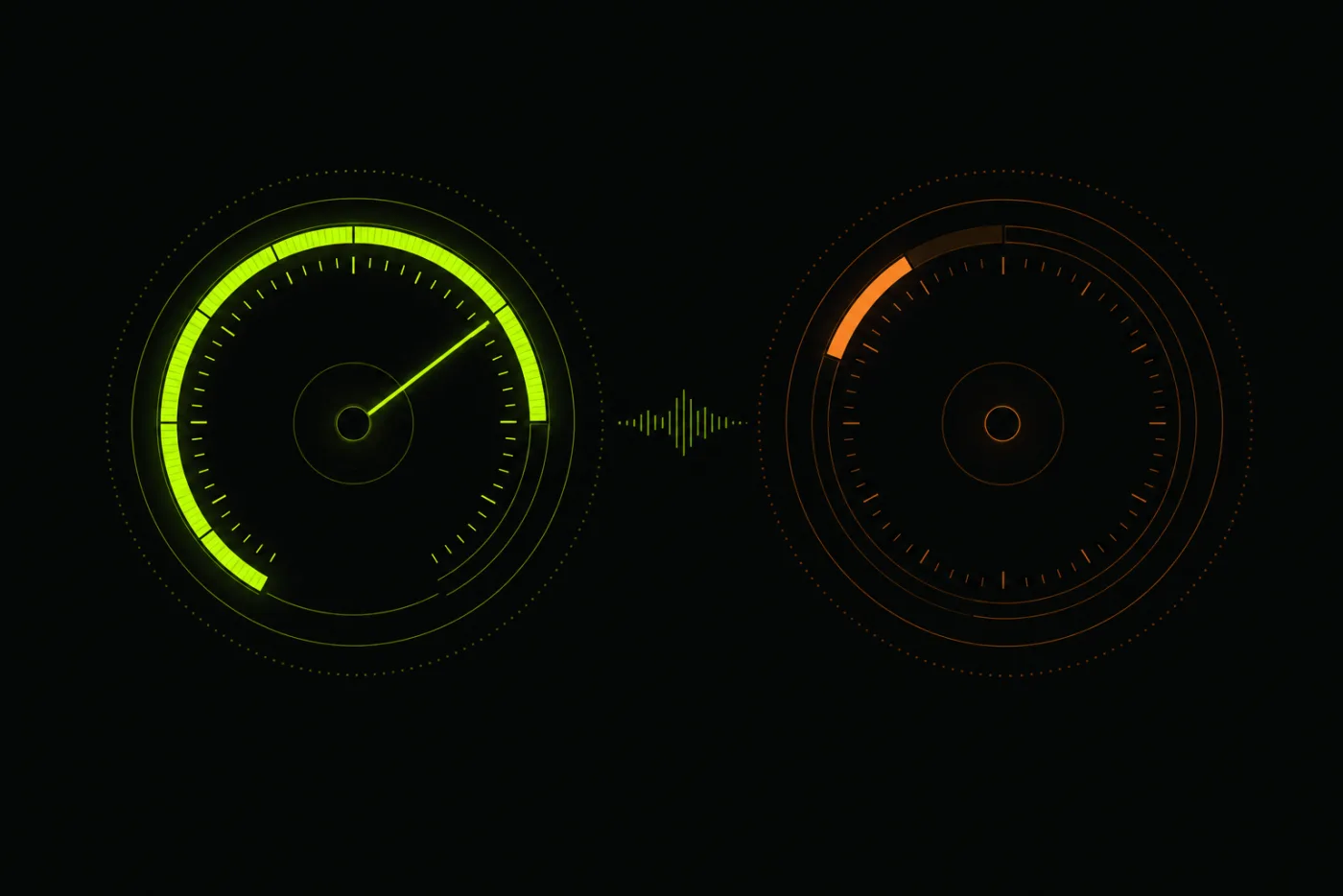
Most focus tools tell you one thing: are you focused right now. That is useful. But it misses something.
You can be focused and still running out of gas. That is cognitive load. It is the mental cost of the work, not just your attention on it. Push through high load for too long and your focus drops, your errors go up, and the next hour is worse.
So we track both. Focus tells you if you are in the work. Load tells you how much it is costing you.
The point is timing. When focus is high and load is low, that is your window. Go hard. When load climbs and focus starts to slip, that is a sign to take a short break before the crash, not after.
We learn your baseline over time. What high focus looks like for you. How long you tend to hold it. How long you need to recover. Then the app can nudge you at the right moment instead of a random one.
The old advice was work harder. We think the better advice is work with your brain. Know when to push. Know when to recover.